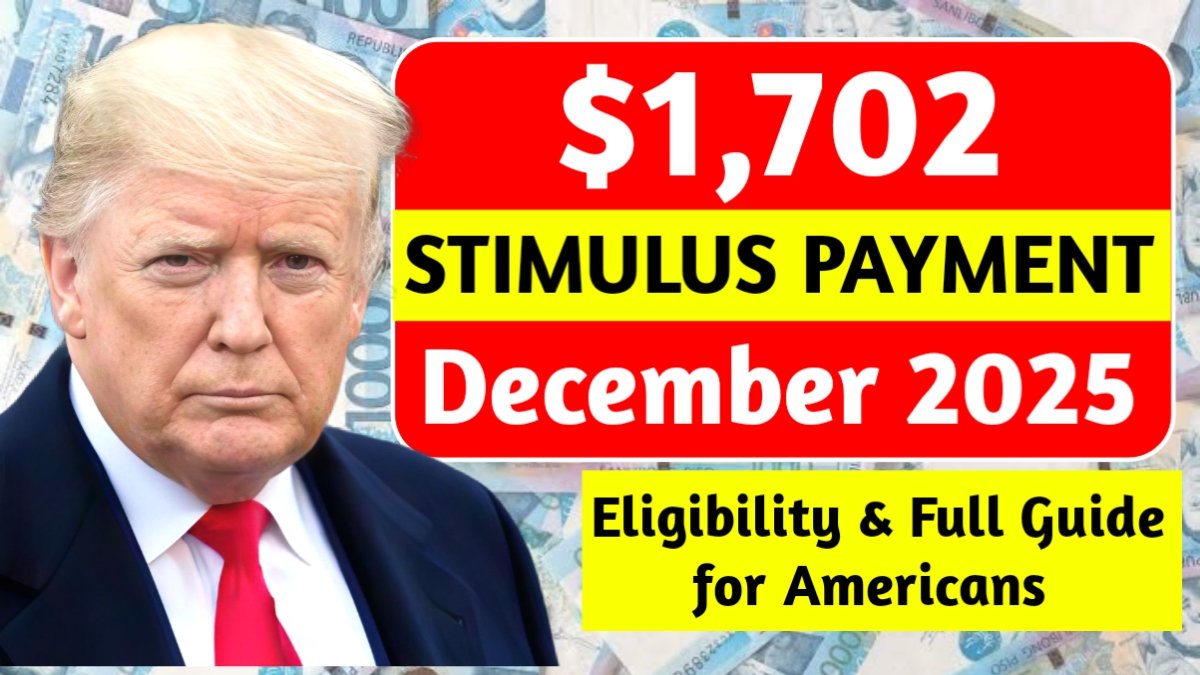
The buzz is everywhere—TikTok, Facebook, YouTube shorts. “Every American is getting a $1,702 stimulus check this December!” The headlines practically shout it. But before you start planning how to spend that cash, let’s clear up the confusion: this is not a federal stimulus check. The truth behind the now-viral “$1,702 December stimulus” is more nuanced—and much more limited—than social media lets on.
Yes, a real $1,702 payment is being issued. But no, it’s not going to every American. In fact, it only applies to residents of one specific state, as part of a long-standing state-level dividend program that has nothing to do with the IRS or any new federal aid package.

So Where Did the $1,702 Number Come From?
The $1,702 figure isn’t made up. It’s based on a state-run payout system, usually tied to things like natural resource revenues or state investment earnings. The program has been around for years and distributes annual dividends to eligible residents of that state. The amount varies year by year depending on the state’s revenues and legislative decisions—and this year, that figure just happens to be around $1,702.

But here’s the catch: this is not a nationwide benefit. It’s not connected to the IRS, it’s not a pandemic-era stimulus, and it’s definitely not something Congress passed this year. The headlines making the rounds on social media? They’ve taken a real payment and stripped it of all context.
Why Are People So Quick to Believe It?
It makes sense. Between 2020 and 2021, most Americans received three rounds of federal stimulus checks—$1,200, $600, and $1,400—no matter where they lived. Those checks helped families stay afloat, and people got used to the idea of relief being just a few clicks or deposits away.

So now, when a number like $1,702 pops up and spreads like wildfire across social media, many assume it’s just another federal benefit. Add in financial stress, rising inflation, and holiday expenses, and it’s easy to see why hope—and misinformation—can spread fast.
How Did the Rumor Spread So Quickly?
You guessed it: viral videos, misleading thumbnails, and catchy captions like “$1,702 for every American this Christmas!” These short-form clips are designed for engagement, not accuracy. They rarely mention eligibility or that the payment is state-based, and the algorithms make sure these posts reach millions.

At the same time, scammers saw an opportunity. Fake IRS emails, phishing texts, and sketchy websites popped up offering “fast approval” or “early access” in exchange for personal info. It’s a classic playbook: when people are confused, scammers pounce.
Who Actually Gets the $1,702?
To be clear: only residents of the state that operates this annual dividend program will receive the $1,702 payment. And even within that group, eligibility isn’t automatic. Requirements typically include:

- Living in the state for a minimum amount of time during the year
- Proving physical presence and residency
- Filing required forms or state taxes on time
- No disqualifying criminal history or outstanding legal issues
If you don’t live in this state, there’s no path to get the money. It’s not connected to Social Security, SSDI, SSI, Veterans benefits, or any federal aid. And yes, state officials have already spoken out to clarify the facts.
When Are the Payments Coming?
Based on past years, direct deposits typically begin in mid-December for early applicants. A second wave of payments usually lands closer to the holidays, while late submissions or pending verifications might get pushed into early January 2026.
As always, paper checks take longer, especially during the holiday mailing rush. State officials are urging residents to check their official government portal—not third-party blogs or social media accounts—for real updates on payment timelines.

Protect Yourself from Scams
Whenever money is involved, scammers follow. And with a number like $1,702 floating around, it’s open season.
Here’s what fraud experts want you to know:
- The IRS does not text you for banking info—ever.
- Don’t trust any website asking you to pay a fee to access government funds.
- Avoid links that promise “stimulus unlocks” or “priority processing.”
- Stick to .gov websites and official state pages to check your eligibility.
Laura Hendricks, a U.S. consumer fraud analyst, puts it bluntly: “Scammers thrive on confusion. The more people believe something without checking, the easier their job becomes.”
Why This Rumor Matters
Beyond the confusion, this whole episode highlights a bigger issue in 2025: misinformation is everywhere, and it’s only getting harder to tell what’s real. Between economic stress and fragmented news sources, even well-meaning people can fall for viral claims.
And that has real consequences. Some families may put off paying bills or shift their holiday budgets based on money they think is coming. Others may hand over private info to bad actors hoping to “get ahead” in line for a payment that doesn’t even apply to them.

The Bottom Line
The $1,702 December payment is real—but it’s local, not national. If you live in the specific state administering the program and meet the requirements, great—you’re in line for a well-timed year-end dividend. But for the rest of the country, there’s no $1,702 stimulus check coming from the IRS or Congress.
This isn’t a new federal benefit. It’s a long-running state program that’s been taken out of context, chopped up into viral soundbites, and shared across the country with no disclaimers.
So before you click, share, or plan your holiday shopping based on that number, make sure you know whether it applies to you. In the age of misinformation, a little fact-checking can go a long way.