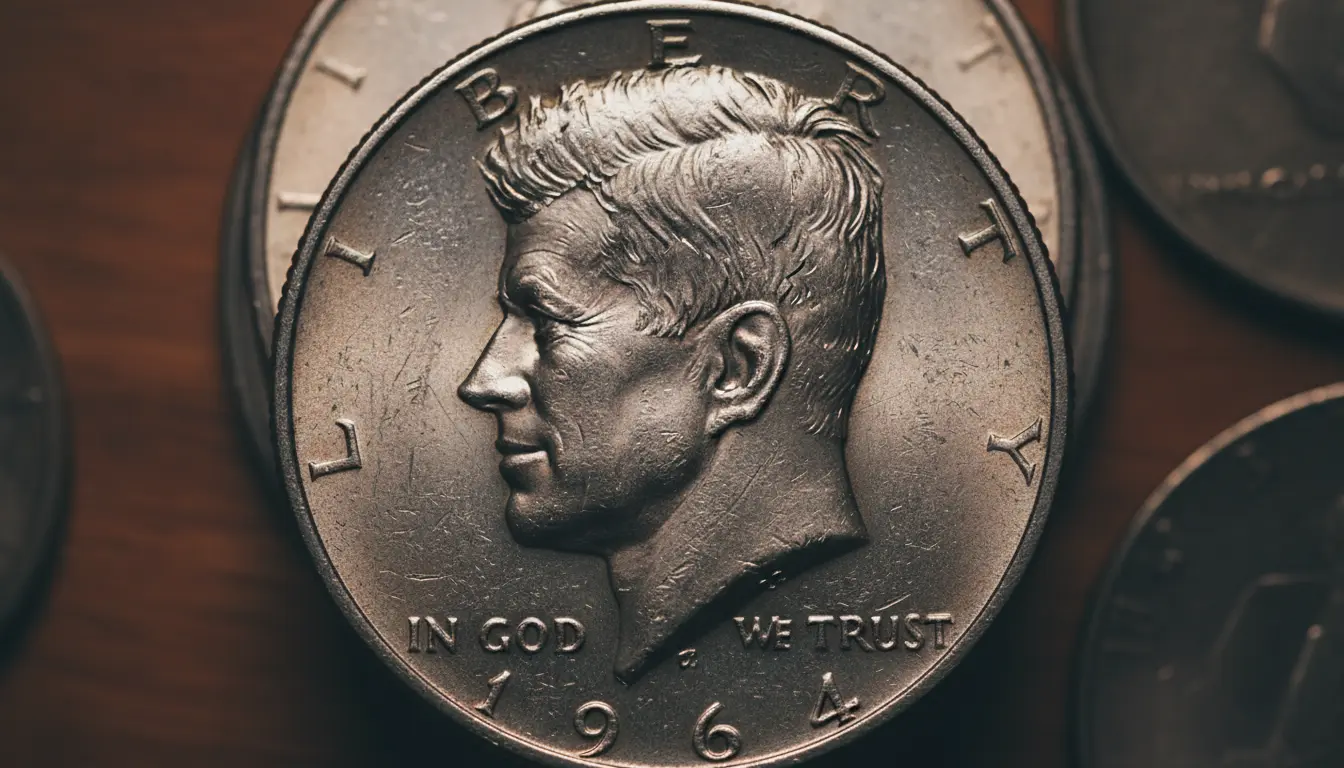
The Kennedy Half Dollar was introduced in 1964 following the assassination of President John F. Kennedy. It replaced the Franklin half dollar and quickly became a symbol of national mourning and remembrance.
Designed by Gilroy Roberts (obverse) and Frank Gasparro (reverse), the coin has undergone several production changes, including shifts in silver content and special mintings for collectors. Understanding the key date ranges is important for identification and valuation.
How to Identify a Kennedy Half Dollar
Identifying a Kennedy Half Dollar requires attention to the date, mint mark, and composition. These factors help determine if the coin is a common piece or something more collectible.

Follow these steps to check a coin:
- Look at the date on the obverse; 1964 is the first year of issue.
- Locate the mint mark on the reverse near the eagle or on the obverse under Kennedy’s neck for later dates.
- Check the edge and weight to help determine silver content for older pieces.
Mint Marks and Dates
Key date ranges are crucial for collectors. The most notable are 1964 (90% silver) and 1965–1970 (40% silver). From 1971 onward, the coins are mostly copper-nickel clad for circulation.

Mint marks such as D (Denver), S (San Francisco), and P (Philadelphia) appear on various issues. Proof coins, business strikes, and special sets may have different marks or finishes.
Kennedy Half Dollar Value
The value of the Kennedy Half Dollar can vary widely. Factors that influence value include the year, mint mark, composition, condition, and rarity of strikes or errors.
Generally, silver coins and well-preserved proofs fetch higher prices. Circulated modern pieces are often worth face value plus a small premium to collectors.

Factors That Affect Value
- Composition: Coins from 1964 (90% silver) and 1965–1970 (40% silver) are typically more valuable due to their silver content.
- Condition: Coins graded MS65 or higher hold more value for collectors; circulated grades are less sought after.
- Rarity and errors: Low-mintage proofs, special issues, or minting errors can significantly increase value.
Practical Tips to Check Authenticity
Use simple tests to verify a Kennedy Half Dollar. You don’t need specialized equipment to spot common signs of value or forgery.

Try these practical checks:
- Weight test: Compare the coin’s weight to the standard for its year and composition.
- Magnet test: Genuine silver and copper-nickel coins are non-magnetic.
- Visual inspection: Look for sharp details, mint marks, and any unusual surface textures that suggest casting or alteration.
Did You Know?
The Kennedy Half Dollar’s design was approved and rushed into production less than two months after President Kennedy’s death in 1963. The first coins were struck in 1964.
Buying and Selling Kennedy Half Dollars
When buying or selling, use trustworthy channels like reputable dealers, established auction sites, and coin shows. For higher-value coins, consider getting them authenticated and graded by a recognized service.
Keep these negotiating tips in mind:
- Ask for clear photos or a certificate if buying online.
- Compare listings and recent sales for similar dates and grades.
- When selling, consider grading services to increase buyer confidence for expensive coins.
Packaging and Storage
Store Kennedy Half Dollars in a cool, dry place and avoid PVC flips that can damage surfaces over time. Use acid-free coin holders, capsules, or albums designed for coins.

Proper storage helps preserve condition and value for future sale or inheritance.
Real-World Example: Small Case Study
Case: A hobbyist found a jar of mixed coins and discovered a 1964 Kennedy Half Dollar in lightly circulated condition. They checked the date and noted the heavier weight consistent with 90% silver.
The coin was listed on a local auction site where it attracted interest from collectors. After comparing recent sales and factoring in the silver content, the seller accepted an offer that was several times face value, showing how simple identification can uncover value in everyday finds.

Common Mistakes to Avoid
- Assuming all older coins are rare—many were produced in large numbers and are common.
- Relying solely on appearance—weight and composition tests add confidence.
- Skipping authentication for high-value items—grading increases sale potential and trust.
Final Checklist for Collectors
Use this quick checklist before buying or selling a Kennedy Half Dollar:
- Confirm the date and mint mark.
- Test or verify composition for silver content.
- Assess condition and consider grading for valuable coins.
- Compare market prices and recent auction results.
Understanding the history, identification tips, and value factors of the Kennedy Half Dollar helps both new and experienced collectors make informed decisions. Follow practical checks and consult experts when needed to protect your investment.
