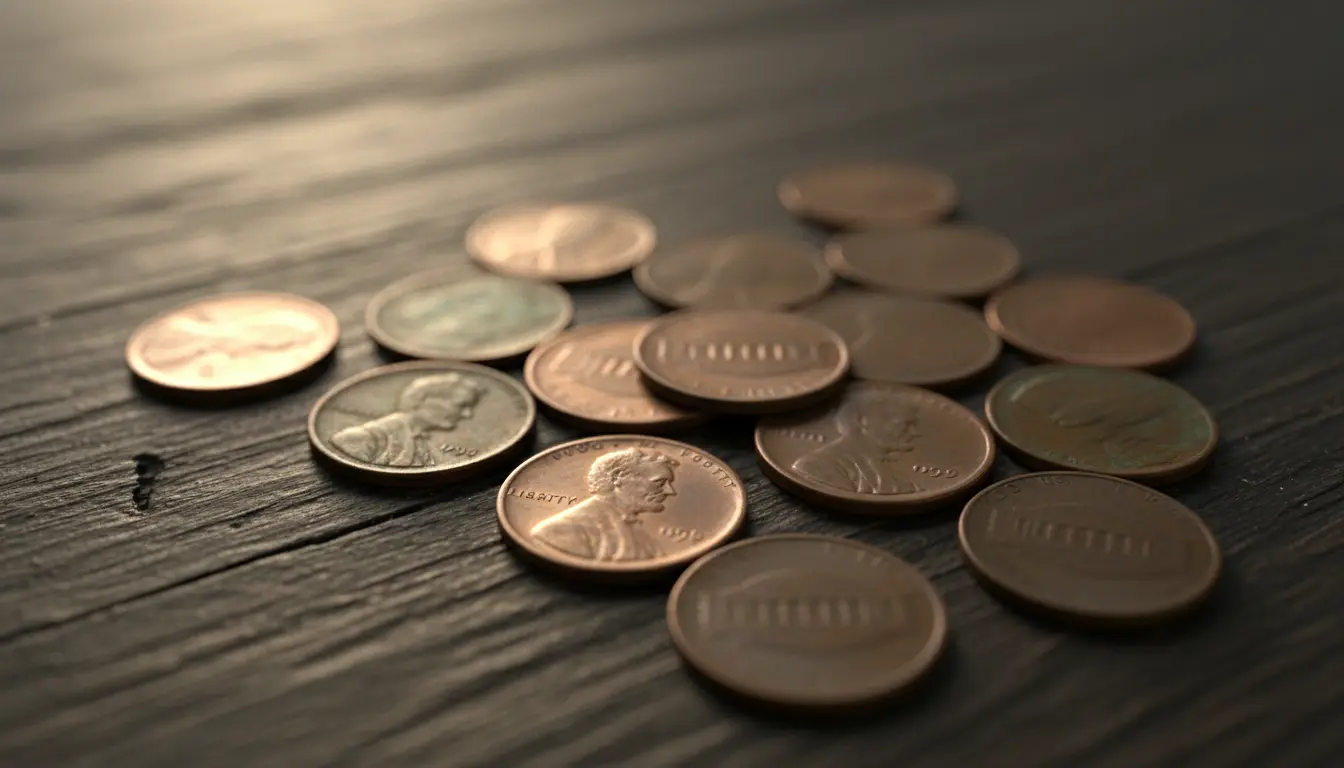
This guide covers the Top 10 Rare Pennies of the Twentieth Century and offers tips on how to identify them. It’s designed for collectors and anyone who might find old pennies in their change.
Each entry includes key identifying features, reasons for rarity, and rough value ranges. Use this as a starting point before seeking professional grading or appraisal.
How to Use This Guide to the Top 10 Rare Pennies of the Twentieth Century
Look for mintmarks, doubling, planchet type, and any unusual dates or mint errors. Using a magnifying glass for photographs and checking weights can help confirm different varieties.

If you think you have a valuable coin, don’t clean it. Instead, reach out to a reputable coin dealer or grading service for authentication.
1. 1909-S VDB Lincoln Cent
The 1909-S VDB is one of the most well-known rarities. It features the initials of designer Victor David Brenner on the reverse. Its low mintage and high demand among collectors keep prices elevated.
Look for the VDB initials on the reverse and the S mintmark. Values can vary significantly, from several hundred dollars to five figures for high-quality pieces.
2. 1914-D Lincoln Cent
The 1914-D is hard to find due to a small mintage in Denver and relatively few high-grade survivors. It’s a key date for Lincoln cent collections.
Check for a clear 1914 date and a D mintmark on the front. Even worn examples can be valuable for completing a collection.
3. 1922 Plain (No D) Lincoln Cent
In 1922, many cents were overstruck, resulting in some that lack the D mintmark, creating the 1922 plain variety. Collectors value these for their unique minting error.
Inspect the reverse for any remnants of a D; true “No D” coins are rarer. Values can range from a few hundred to several thousand dollars based on condition.
4. 1931-S Lincoln Cent
The 1931-S is scarce due to low production during the Depression and high demand among specialists. Coins in high grade are particularly sought after.
Confirm the S mintmark and date; coins with sharp details are worth more. Mid-grade examples are collectible and often more affordable than mint-state coins.

5. 1955 Doubled Die Obverse Lincoln Cent
The 1955 doubled die features prominent doubling of the date and lettering on the front. It’s one of the most recognized doubled-die errors for U.S. cents.
Look for clear doubling on the word LIBERTY and the date. Even worn coins attract attention from error collectors and can command high prices.
6. 1943 Copper Lincoln Cent
Most 1943 cents were made of steel due to wartime metal restrictions. However, rare copper planchet strikes are highly collectible and can fetch impressive prices.

Avoid testing the metal with magnets alone; professional testing and grading are advisable. Authentic pieces have sold for six figures at auction in some cases.
7. 1944 Steel Lincoln Cent
After 1943, most cents returned to bronze, making any 1944 struck on leftover steel planchets unusual. These steel-on-1944 coins are rarer than standard bronze cents.
Steel coins will be magnetic and lighter; look for the gray steel appearance and verify with a trusted dealer for authenticity and certification.
8. 1909-S Lincoln Cent (Non VDB)
Different from the VDB variety, 1909-S non-VDB cents are also rare and sought after for date and mint completeness. They can look similar to other 1909 variations.
Check if the VDB initials are present on the reverse to identify the variety accurately. The condition will greatly affect the price.
9. 1938 Doubled Die Obverse Lincoln Cent
Some 1938 doubled-die obverse varieties exist, showing noticeable doubling of the date and letters. These coins are of interest to specialists and collectors of errors.

Use magnification to check for doubling on LIBERTY and the date. Market demand and grade will influence value, with higher-grade doubles commanding better prices.
10. 1972 Doubled Die Obverse Lincoln Cent
The 1972 doubled die obverse is another modern error that shows clear doubling on the date and motto, making it popular among collectors.
While this error is more common than older ones, prices are still attractive for collectors looking for dramatic doubling.
Identification Tips for the Top 10 Rare Pennies of the Twentieth Century
Before assuming a coin is rare, use these practical checks: weight, magnet tests, magnified inspection of the date and mintmark, and comparison to reference photos. Weight and metal composition tests are crucial for identifying 1943 and 1944 anomalies.
Take photos of both sides, avoid cleaning, and document provenance if possible. If you suspect a coin is high-value, send it to a grading service for confirmation.

Did You Know?
Some rare pennies from the twentieth century are valuable because they were struck on incorrect planchets or have doubled dies. Even a single error can make a common date coin highly desirable.
Small Case Study: A Found 1943 Copper Cent
A collector discovered a non-magnetic 1943 cent in a jar of family coins and thought it might be copper. After professional testing and grading, the coin sold at auction for a six-figure amount.

This example highlights the importance of not cleaning a suspected coin and seeking proper authentication before selling or insuring it.
Quick Checklist Before You Sell or Grade
- Do not clean the coin — cleaning reduces value.
- Compare photos to reference guides and error databases.
- Check for mintmarks, doubling, and unusual metal with non-destructive tests.
- Use a reputable grading service for high-value items.
Final Thoughts on the Top 10 Rare Pennies of the Twentieth Century
These ten varieties represent significant and collectible anomalies from the 1900s. They reward careful inspection and a good understanding of minting history.
Start with thorough identification and consult experts when the potential value is high. Proper documentation and certified grading will enhance your chances of a successful sale and boost collector confidence.